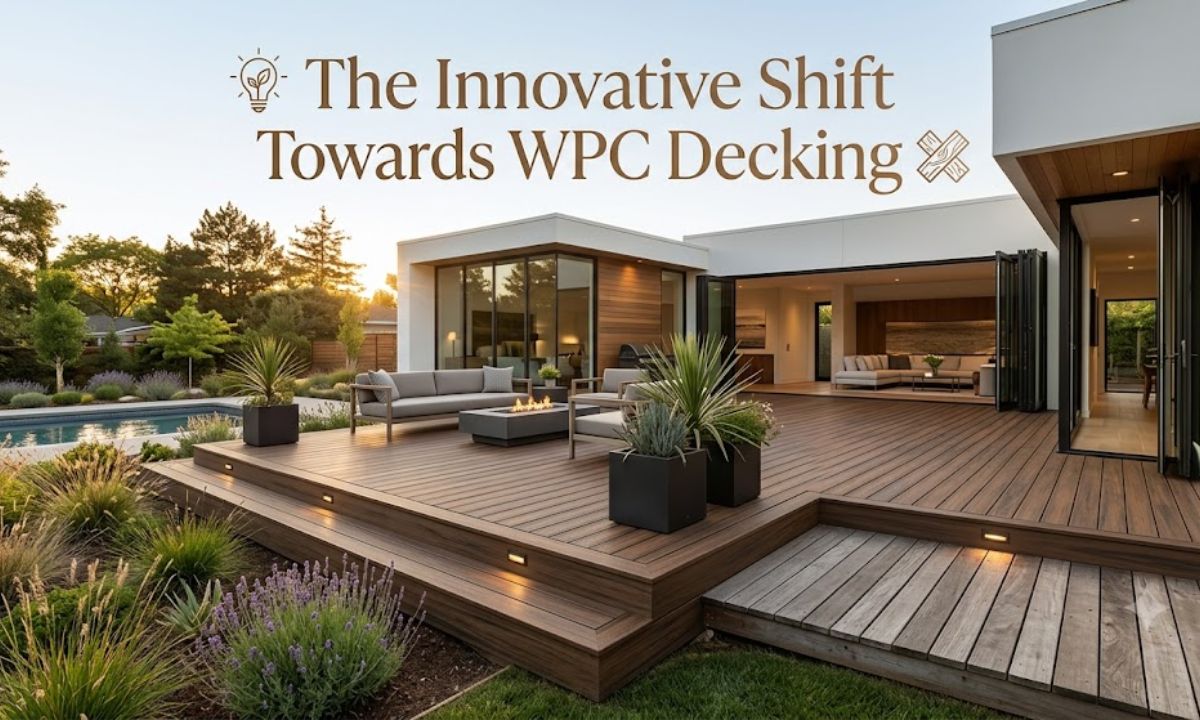
Outdoor living has changed. Homeowners no longer want a deck that demands constant staining, sanding, and sealing every single year. They want something that looks good, lasts long, and doesn’t eat up every free weekend in spring. That’s exactly why Wood Plastic Composite (WPC) decking has moved from a niche alternative to the default choice for millions of patios, balconies, and commercial walkways around the world.
WPC decking blends the warmth of natural wood with the resilience of engineered plastic, and the result is a product that resists rot, shrugs off insects, and barely needs any upkeep. But there’s more to this shift than convenience. It’s also about sustainability, smarter manufacturing, and a design flexibility that traditional timber simply can’t match.
In this guide, we’ll break down what WPC decking actually is, how it stacks up against real wood, what it means for the environment, and why it’s becoming just as common in shopping malls and hotel resorts as it is in backyards. Whether you’re a homeowner planning a renovation or a contractor comparing materials for a client, this article gives you a clear, practical picture of where decking technology stands today.
The Composition and Benefits of WPC Decking
Before deciding whether WPC decking is right for a project, it helps to understand exactly what’s inside the boards and why that composition creates such a different ownership experience compared to timber.
What Constitutes WPC Decking?
WPC stands for Wood Plastic Composite, and as the name suggests, it’s an engineered material rather than a solid piece of timber. Manufacturers combine three core ingredients:
- Wood fiber or wood flour — often sourced from sawdust, wood chips, or recycled timber offcuts
- Thermoplastic polymers — typically polyethylene (PE), polypropylene (PP), or PVC
- Bonding and additive agents — including UV stabilizers, pigments, and coupling agents that help the wood and plastic bind together evenly
These materials are heated, blended, and extruded under pressure into board profiles, which can be solid, hollow, or grooved for hidden-fastener systems. The exact ratio of wood to plastic varies by brand, but most quality boards use somewhere between 50% and 70% wood fiber, with the remainder made up of plastic and additives.
Some premium products go a step further with a co-extrusion process, wrapping a protective plastic shell (a “cap”) around a wood-plastic core. This capped construction significantly boosts resistance to fading, staining, and moisture absorption compared to older, uncapped composite boards.
Manufacturers generally produce WPC boards in a few distinct formats, and knowing the difference helps buyers choose the right fit for their project:
- Solid co-extrusion boards — dense, heavy-duty boards with a capped shell, ideal for high-traffic residential and commercial areas
- Hollow co-extrusion boards — lighter, more budget-friendly, and easier to handle during installation
- Classic (uncapped) decking — a more affordable option that still delivers wood-like looks but with slightly less resistance to staining and fading
- Interlocking DIY tiles — small composite tiles designed for quick, tool-free installation over balconies, rooftops, or existing patios
Understanding these formats matters because “WPC decking” isn’t a single product — it’s a category, and quality can vary significantly between a budget classic board and a premium capped solid board.
Advantages Over Traditional Wood
Once you understand the composition, the practical benefits make a lot more sense. Here’s how WPC decking generally compares with solid timber decking:
| Feature | WPC Decking | Traditional Wood Decking |
| Moisture resistance | High — resists swelling and rot | Low to moderate — prone to warping |
| Insect resistance | Excellent | Vulnerable to termites and borers |
| Maintenance | Occasional cleaning only | Annual staining, sealing, sanding |
| Splinters | None | Common as wood ages |
| Color consistency | Uniform across boards | Varies with grain and species |
| Typical lifespan | 20–30+ years | 10–15 years |
| Initial cost | Higher | Lower |
The takeaway is simple: wood decking is cheaper on day one, but WPC decking tends to cost less over the life of the deck once you factor in repairs, refinishing, and replacement.
Beyond the table above, there are a few practical, everyday advantages worth highlighting:
- No splinters underfoot — a genuine safety benefit for families with young children or pets who spend time barefoot on the deck
- Resistance to warping and cupping — WPC boards hold their shape even through repeated wet-dry cycles, whereas timber planks can twist and separate over a single season
- Consistent structural performance — because the material composition is engineered rather than naturally variable, WPC boards perform predictably across an entire deck surface
- No need for chemical treatments — timber decking often relies on pressure treatment or periodic sealant application to resist decay, while WPC decking achieves similar resistance through its manufactured composition alone
None of this means wood decking is a poor choice — solid timber still offers a natural look and feel that some homeowners prefer, along with a lower entry price point. But for anyone prioritizing long-term durability with minimal upkeep, WPC decking is built to solve exactly the problems that timber decking is known for.
Sustainability and Environmental Impact

Environmental performance is one of the biggest reasons architects and eco-conscious homeowners are switching to composite materials, and it goes well beyond “it’s made from recycled stuff.”
A Greener Choice
Most WPC manufacturers use recycled wood waste — sawdust, shavings, and offcuts that would otherwise be discarded — combined with recycled or reclaimed plastics such as post-consumer polyethylene bags and packaging film. This gives the material a dual environmental benefit:
- It diverts plastic waste from landfills and oceans
- It repurposes wood byproducts instead of requiring fresh timber harvesting
Because WPC decking doesn’t need chemical preservatives, pressure treatments, or petroleum-based sealants to survive outdoors, it also reduces the chemical runoff that traditional treated lumber can introduce into soil and waterways over time.
That said, sustainability isn’t absolute. WPC boards are harder to recycle at end-of-life than pure plastic or pure wood, since separating the two materials is difficult. Buyers who prioritize sustainability should look for manufacturers that disclose recycled content percentages and offer take-back or recycling programs.
When evaluating a manufacturer’s environmental claims, it’s worth asking a few practical questions:
- What percentage of the wood fiber and plastic content is genuinely recycled, versus virgin material?
- Does the manufacturing facility treat or filter wastewater and emissions from the extrusion process?
- Is there a documented take-back or recycling scheme for boards at the end of their service life?
- Are the UV stabilizers and pigments used free from heavy metals or other harmful additives?
These questions help separate genuinely responsible manufacturers from those using “eco-friendly” as a marketing label without substantive backing.
Lifecycle and Longevity
A product’s environmental footprint isn’t just about what it’s made from — it’s also about how long it lasts before it needs replacing. A wood deck that needs replacing every 10–15 years generates far more waste over 30 years than a composite deck that’s still going strong after three decades.
Industry data consistently shows that standard WPC decking lasts roughly 20 to 25 years, while premium capped composite boards can perform well beyond 30 years when installed correctly. That extended service life directly reduces the cumulative demand on forests and manufacturing resources over the long run.
Installation and Maintenance
For most buyers, day-to-day practicality matters just as much as the environmental story. This is where WPC decking really separates itself from timber.
Ease of Installation
Modern WPC boards are engineered with the installer in mind. Many feature:
- Pre-grooved edges designed for hidden fastener clip systems
- Consistent dimensions, unlike natural wood which can vary board to board
- Lightweight profiles (hollow-core options) that reduce handling strain
- Compatibility with standard joist spacing, simplifying the substructure
These design choices mean a WPC deck can often be installed faster than a comparable wood deck, with fewer visible screw heads and a cleaner finished look. That said, proper spacing for thermal expansion and a solid, level substructure (ideally treated or composite joists) are still essential steps that shouldn’t be skipped.
A few installation best practices consistently separate a long-lasting WPC deck from one that develops problems within a few years:
- Leave expansion gaps — WPC boards expand and contract slightly with temperature changes, so manufacturer-recommended gaps between boards and against walls are essential
- Ensure adequate ventilation underneath — airflow beneath the deck surface prevents moisture buildup and reduces the risk of surface mold in shaded areas
- Use a level, well-supported substructure — joist spacing should match the manufacturer’s specifications, especially for hollow-core boards
- Avoid direct ground contact — raising the structure on pedestals, sleepers, or a proper frame prevents water pooling underneath the boards
- Follow the recommended fastening system — hidden clips are engineered for specific groove profiles, and mixing systems between brands can compromise the finish
Skipping these steps is one of the few ways a WPC deck can develop issues like surface warping or uneven seams, even though the material itself is inherently more stable than solid wood.
Low Maintenance Requirements
This is arguably the single biggest selling point of WPC decking. Unlike wood, which needs sanding, staining, and sealing on a recurring cycle, a composite deck typically only needs:
- A seasonal wash with mild soap and water
- Occasional sweeping to prevent debris buildup in shaded corners
- Prompt cleanup of spills to avoid surface staining on uncapped boards
There’s no need for annual sealants, no risk of splintering underfoot, and no sanding down gray, weathered planks every few years. For busy homeowners or commercial property managers overseeing multiple outdoor areas, this maintenance gap can translate into significant time and cost savings.
A simple seasonal maintenance checklist for WPC decking typically looks like this:
| Task | Frequency | Notes |
| Sweep debris | Weekly to biweekly | Prevents buildup in board grooves |
| Wash with soap and water | Every 1–3 months | Removes dirt, pollen, and light staining |
| Check for mold in shaded areas | Seasonally | More common in damp, low-airflow spots |
| Inspect fasteners and clips | Annually | Ensures boards remain securely fixed |
| Deep clean before/after winter | Twice yearly | Keeps surface looking fresh year-round |
Compare that to a wood deck, which typically requires annual sanding, staining or sealing, and more frequent repairs to combat rot, insect damage, or splintering — and the time savings become obvious over a five- or ten-year period.
Design Flexibility and Aesthetic Appeal
Durability and low maintenance don’t mean much if the material looks flat or artificial. Fortunately, WPC decking has come a long way in mimicking — and sometimes surpassing — the visual warmth of real wood.
Versatility in Design
WPC boards are manufactured in a wide range of:
- Colors — from classic teak and walnut tones to gray, charcoal, and contemporary weathered finishes
- Textures — wood-grain embossing, brushed finishes, and smooth contemporary surfaces
- Profiles — solid boards for a premium feel, hollow boards for lighter weight, and interlocking DIY tiles for quick installs
This variety allows designers to match WPC decking to almost any architectural style, from rustic garden retreats to sleek, minimalist rooftop terraces.
Aesthetic Durability
Unlike painted or stained wood, which visibly fades, peels, or grays as it weathers, quality WPC decking — particularly capped composite — retains its color and texture consistency for years. UV-stabilizing additives in the manufacturing process slow down fading, and the plastic component prevents the surface cracking and splintering that eventually make old wood decks look tired and worn.
Economic Considerations

Cost is often the deciding factor for homeowners weighing their options, and it’s important to look beyond the sticker price on the boards themselves.
Cost Efficiency Over Time
WPC decking generally costs more upfront than basic pressure-treated wood, but less in ongoing expenses. Here’s a simplified breakdown of how the total cost of ownership tends to compare:
| Cost Factor | WPC Decking | Wood Decking |
| Material cost per sq. ft. | Moderate to high | Low to moderate |
| Annual maintenance cost | Minimal (cleaning only) | Moderate to high (staining, sealing) |
| Expected replacement cycle | 20–30+ years | 10–15 years |
| Repair frequency | Low | Higher (rot, splintering, warping) |
| Long-term value | Strong | Depends on upkeep discipline |
For homeowners planning to stay in a property for a decade or longer, the reduced maintenance spend and extended lifespan of WPC decking typically outweigh the higher initial investment. Those planning a short-term sale or who genuinely enjoy hands-on wood upkeep may still find traditional lumber more appealing.
Technological Advancements
The WPC industry hasn’t stood still. Manufacturing innovation has been a major driver behind why composite decking now performs so much better than the composite products sold a decade ago.
Innovation in WPC Manufacturing
Several advances have reshaped the category:
- Co-extrusion capping — a protective outer shell fused to the composite core, dramatically improving stain, fade, and moisture resistance
- Improved coupling agents — better chemical bonding between wood fiber and plastic reduces moisture absorption and improves structural strength
- Enhanced UV stabilizers — slow down color fading from prolonged sun exposure
- Nano-technology surface treatments — some premium brands now use micro-textured surfaces that reduce heat retention and improve slip resistance
These innovations directly address the older criticisms of composite decking — namely fading, mold growth in shaded areas, and surface heat buildup in direct sun.
Impact on Market Trends
As manufacturing quality has improved, market demand has followed. WPC decking has moved from being viewed as a “budget alternative” to a genuine premium product line in many markets. This shift has encouraged more manufacturers to compete on innovation rather than just price, which benefits buyers through better warranties, wider color ranges, and improved performance guarantees.
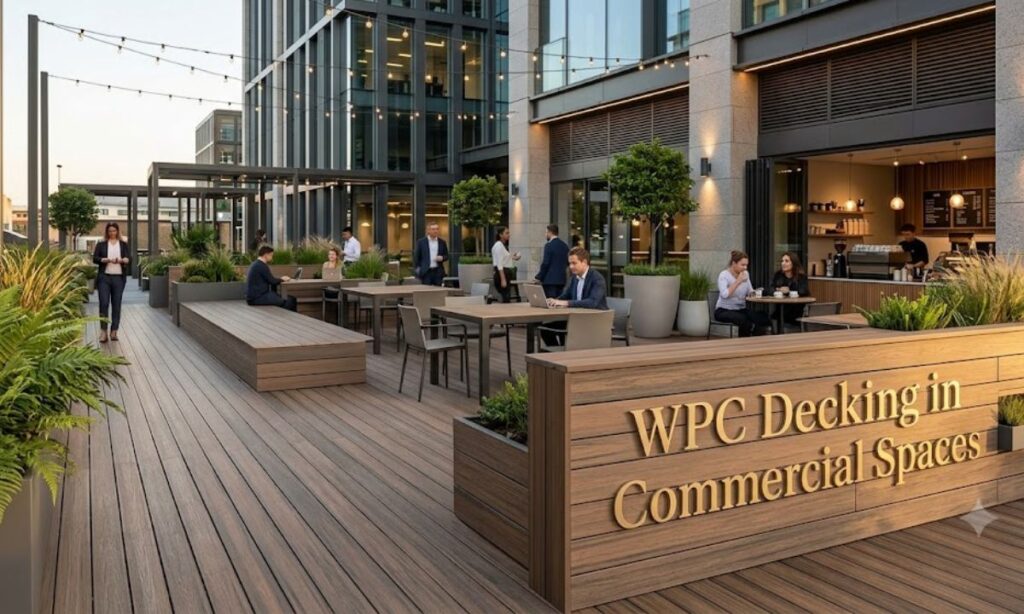
While residential backyards remain the most visible use case, WPC decking has quietly become a workhorse material in commercial and public infrastructure projects.
Applications Beyond the Home
Commercial and public settings where WPC decking is increasingly common include:
- Hotel and resort pool decks
- Restaurant and café outdoor seating areas
- Shopping mall walkways and plazas
- Marina docks and waterfront boardwalks
- Public parks and pedestrian bridges
- Rooftop terraces on office and residential buildings
Addressing Commercial Needs
Commercial projects have different priorities than a backyard renovation — durability under heavy foot traffic, minimal downtime for maintenance, and consistent appearance across large surface areas all matter more at scale. WPC decking addresses these needs through:
- Batch-consistent coloring across large board quantities
- Slip-resistant surface textures suited to pool decks and public walkways
- Lower long-term maintenance labor costs across large square footage
- Resistance to heavy use without splintering, which matters for barefoot pool areas and high-traffic public spaces
For property managers overseeing multiple commercial sites, the reduced maintenance burden of WPC decking can represent meaningful long-term operational savings compared to maintaining timber decking across several locations.
FAQ’s
Is WPC decking waterproof?
WPC decking is highly water-resistant and won’t rot or swell like timber, though it isn’t 100% waterproof at the core unless it’s a fully capped composite product.
How long does WPC decking last?
Standard WPC decking typically lasts 20–25 years, while premium capped composite boards can last 30 years or more with proper installation and care.
Does WPC decking get hot in the sun?
Darker-colored WPC boards can retain heat in direct sunlight, so lighter shades or textured, capped finishes are recommended for very sunny climates.
Can WPC decking be installed over concrete?
Yes, WPC decking can be installed over concrete using sleeper systems or raised pedestal supports designed for proper drainage and airflow underneath.
Is WPC decking slippery when wet?
Some smooth-finish boards can become slightly slippery when wet, which is why textured or brushed-finish WPC boards are recommended for pool decks and wet areas.
How do I clean a WPC deck?
A simple wash with mild soap, water, and a soft-bristle brush is usually enough to keep WPC decking clean; avoid harsh solvents or pressure washers at close range.
Is WPC decking more expensive than wood?
WPC decking costs more upfront than basic wood, but its lower maintenance and longer lifespan often make it more cost-effective over 10+ years of ownership.
Conclusion
WPC decking represents a genuine shift in how we think about outdoor flooring, not just a passing trend, but a response to real demands for durability, sustainability, and low-maintenance living. Its composition of wood fiber and recycled plastic delivers the visual warmth people love about timber, without the constant sanding, staining, and repair cycle that comes with it.
From backyard patios to hotel pool decks, WPC decking has proven itself across both residential and commercial settings, backed by continuous manufacturing improvements that keep pushing performance and appearance forward. For anyone planning an outdoor space built to last, WPC decking offers a smart, forward-looking balance of practicality, style, and environmental responsibility.